When couples describe the photographs they hope for, they often start with feelings: elegant, timeless, emotional. The place itself comes up less often, and yet it does as much work as anything else in the frame.
Architecture gives a photograph structure. A long staircase leads the eye. A tall window shapes the light. A row of columns adds rhythm and scale, so the two of you read as part of something larger and older than the day itself.
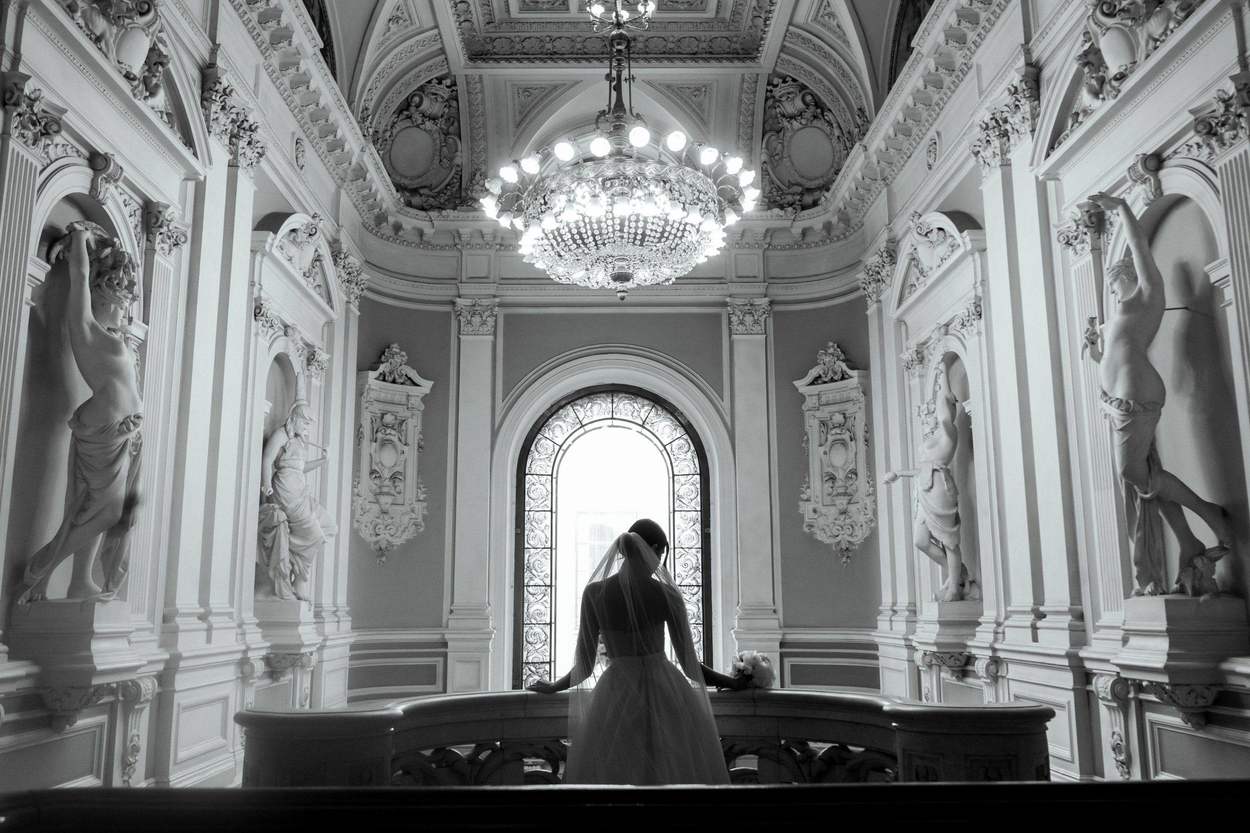
Look for the details you already love
When you tour a venue, notice what makes you stop. It might be a grand entrance, a plain stone wall washed in afternoon light, or a corridor that feels like it belongs in another century. Those are the places worth saving a few unhurried minutes for.
- Doorways, arches and staircases for portraits with a sense of scale.
- Large windows for soft, directional light — especially indoors.
- Garden walls, columns and gates for graphic, uncluttered backgrounds.
- Quiet corners that are away from the crowd and easy to reach.
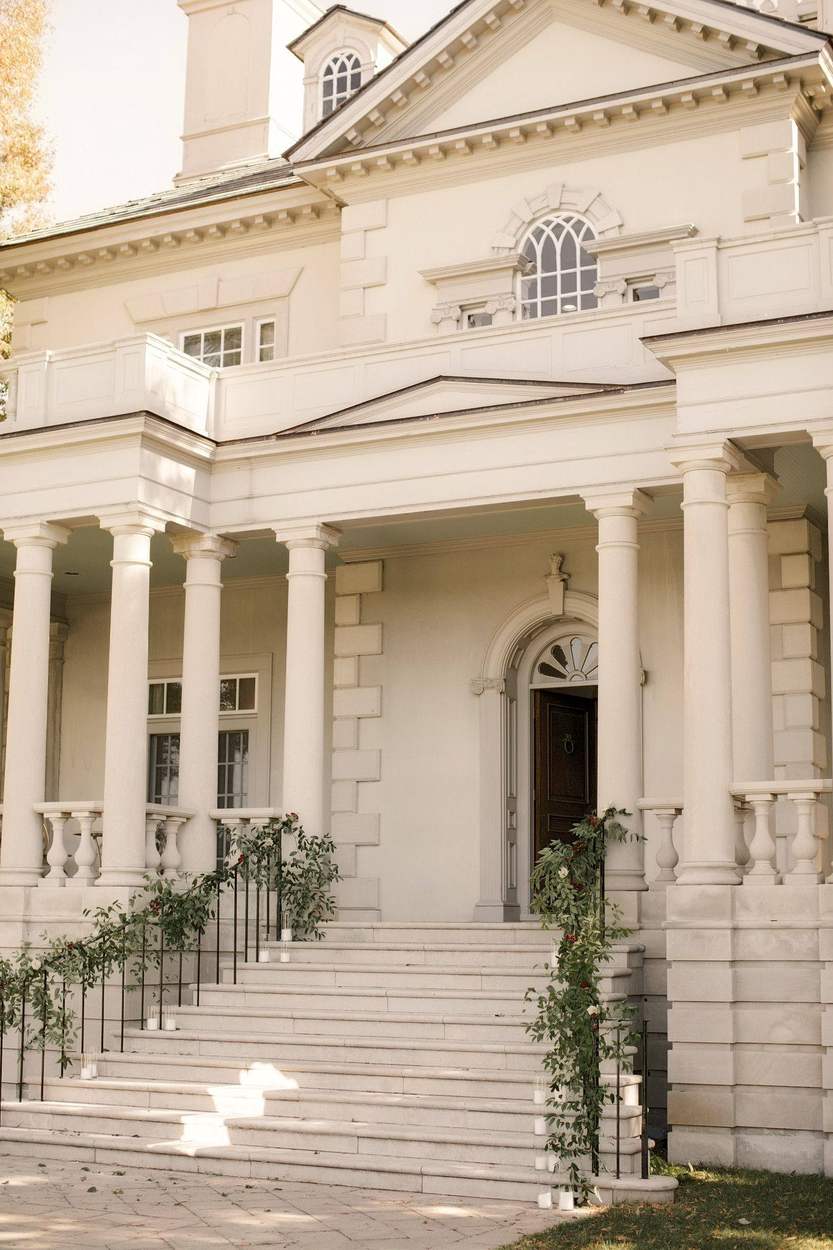
Give it a little time
The most striking architectural portraits are rarely rushed. Leave room in the day for them, and for the walk between locations. A calm, unhurried pace also helps you relax, and a relaxed couple always photographs best.
The setting is not the backdrop to your story. It is part of it.
If you are still choosing a venue, I'm always happy to talk through how its light and architecture might look in photographs. Get in touch and we can begin the conversation.